
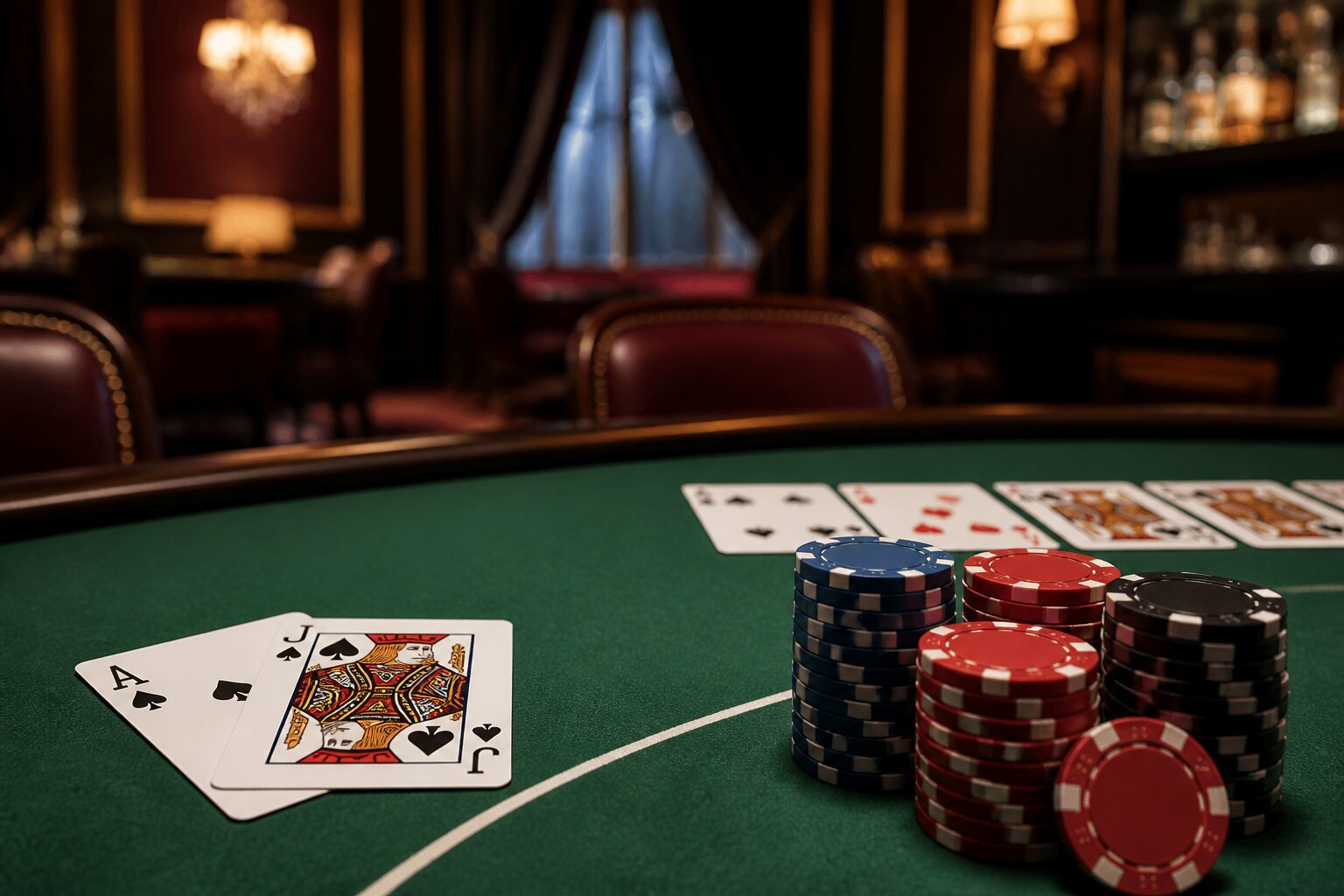
If you've ever sat at a casino table or scrolled through the games online, you might have noticed how blackjack and poker often get mentioned together. Their tables, cards and chips can look similar, so it's easy to see why people mix them up.
But is blackjack actually a type of poker, or are they separate games with their own rules and traditions? Read on to explore what truly sets them apart and how to choose which suits you best.
Understanding the Basics: How Blackjack and Poker Are Played
Blackjack is a card game where the aim is simple: reach a hand value as close to 21 as possible without going over. You play against the dealer rather than other players. Each round starts with two cards dealt to both player and dealer. Players may request extra cards to improve their total or stand to keep their current hand.
Poker is a family of games, with Texas Hold’em being the most recognised example. In Hold’em, each player receives two private cards and five community cards are dealt face up. Players bet in rounds and build the best possible five-card hand using any combination of their own cards and the community ones. Reading opponents and strategic betting are central to poker’s appeal.
While both use standard decks and chips, their mechanics and motivations differ: blackjack is a head-to-house challenge with set options each round, and poker centres on interaction between players, strategic betting and hand-building.
Key Differences Between Blackjack and Poker
Although blackjack and poker share some surface features, they diverge in several important ways.
Who you play against is a major difference. Blackjack pits each player against the dealer; poker is a contest among the players themselves. The objectives also differ: blackjack focuses on totals relative to the dealer’s hand, while poker rewards the best five-card combination or successful betting that causes opponents to fold.
Gameplay rhythm varies too. Blackjack follows a predictable sequence—deal, player choices, then dealer play—so rounds tend to move quickly. Poker unfolds through multiple betting rounds, with more scope for long-term strategies and psychological play.
Card usage illustrates another contrast. Poker’s community cards create shared information and strategic complexity; blackjack hands are private, and what you receive affects only your result. These structural differences lead to distinct skills and table atmospheres.
If you’re curious how the dealing and card use shape each game, the next section explains that in more detail.
House vs Player: Who Are You Competing Against?
Understanding the table dynamic helps explain why blackjack and poker feel so different when you sit down.
How Are Cards Dealt and Used in Each Game?
In blackjack, players receive individual hands—typically two cards to start—and can take additional cards to try to reach the target value. Only the dealer’s and each player’s hands matter for that round; there is no sharing of cards between players.
Rounds are usually resolved quickly, with each player comparing their final hand directly to the dealer’s. The dealer follows a fixed set of rules when drawing, so the uncertainty comes mainly from the cards and the choices each player makes within the allowed options.
In Texas Hold’em, players get two private cards and then five community cards are revealed in stages. Everyone uses those shared cards to form their best five-card hand. That shared element makes poker a game of both card strength and reading opponents’ likely holdings.
Because the community cards are revealed in stages, decisions change as new information arrives. Betting between those stages adds another layer, since how much and when someone bets influences what others think they hold.
What Are the Main Objectives?
Blackjack’s primary aim is to beat the dealer’s hand without exceeding 21. Each round is a direct comparison between player and house actions. The game rewards making sensible, disciplined choices in the moment.
Poker’s aim is to win the pot, either by having the best hand at showdown or by betting in a way that persuades others to fold. Success in poker blends card knowledge, betting judgement and an ability to interpret other players.
These differences determine not just how you play, but what skills you develop. For example:
- Blackjack tends to sharpen quick arithmetic, disciplined decision-making and an ability to manage individual betting choices.
- Poker tends to develop longer-term strategic thinking, psychological reading of opponents and nuanced betting strategy.
Both games offer different experiences and require different mindsets when approaching the table.
Popularity in British Casinos: Which Is More Common?
Both games are well established across UK casinos, though they attract different types of play.
Blackjack is popular for its steady pace and straightforward rules. It’s commonly available on both casino floors and online lobbies, appealing to players who favour predictable rounds and clear decision points.
Poker draws players who enjoy interaction, tournaments and the social elements of the game. Poker rooms and scheduled events often bring together dedicated players for cash games and competitive tournaments, which can create a very different atmosphere from the main casino floor.
Industry data shows blackjack often leads in casual play due to its accessibility, while poker maintains a strong presence in organised play and events. Each game serves a distinct audience, so choice usually reflects whether someone prefers quicker rounds or more sustained social strategy.
If you’re wondering whether common misunderstandings blur these differences, the next section clears up some myths.
Common Myths: Is Blackjack Just Another Poker Variation?
A frequent misconception is that all casino card games are versions of poker. In truth, poker is a specific family of games defined by player-versus-player betting and hand-ranking systems. Blackjack operates under its own rules and deals directly with the dealer, making it a distinct genre.
Another myth suggests skill transfers easily between the two. While card knowledge helps generally, the strategic foundations differ: blackjack strategy revolves around probabilistic decision-making against fixed dealer rules, whereas poker strategy involves reading opponents, betting tactics and long-term position play.
It’s also worth stressing that both games involve risk and should be approached with care. Outcomes are not guaranteed, and players should be mindful of their limits.
With those myths addressed, you might be weighing which game suits you best — the section below helps make that choice clearer.
Choosing Between Blackjack and Poker: Which Game Is Right for You?
Picking between blackjack and poker comes down to personal taste and what you enjoy about card play.
If you like games with direct, fast-paced decisions and predictable structures, blackjack offers consistent rounds where each choice has an immediate and clear consequence. If you prefer strategic depth, social interaction and the ebb and flow of betting over longer sessions, poker provides that environment.
Consider the table atmosphere you want: blackjack tables are often focused and steady, while poker tables invite conversation, reading opponents and developing strategies over multiple hands. Think too about time commitment—poker sessions and tournaments can run much longer than blackjack rounds.
Responsible play is essential regardless of choice. Set limits, know the rules you’re playing under and step away if the experience stops being enjoyable. If you need support, there are organisations in the UK that can help.
Whether you choose blackjack for quick decisions or poker for strategic play, both offer rewarding ways to test your skills and enjoy the company of others. Make your choice based on what you want from the table, and keep the experience comfortable and controlled.
**The information provided in this blog is intended for educational purposes and should not be construed as betting advice or a guarantee of success. Always gamble responsibly.