
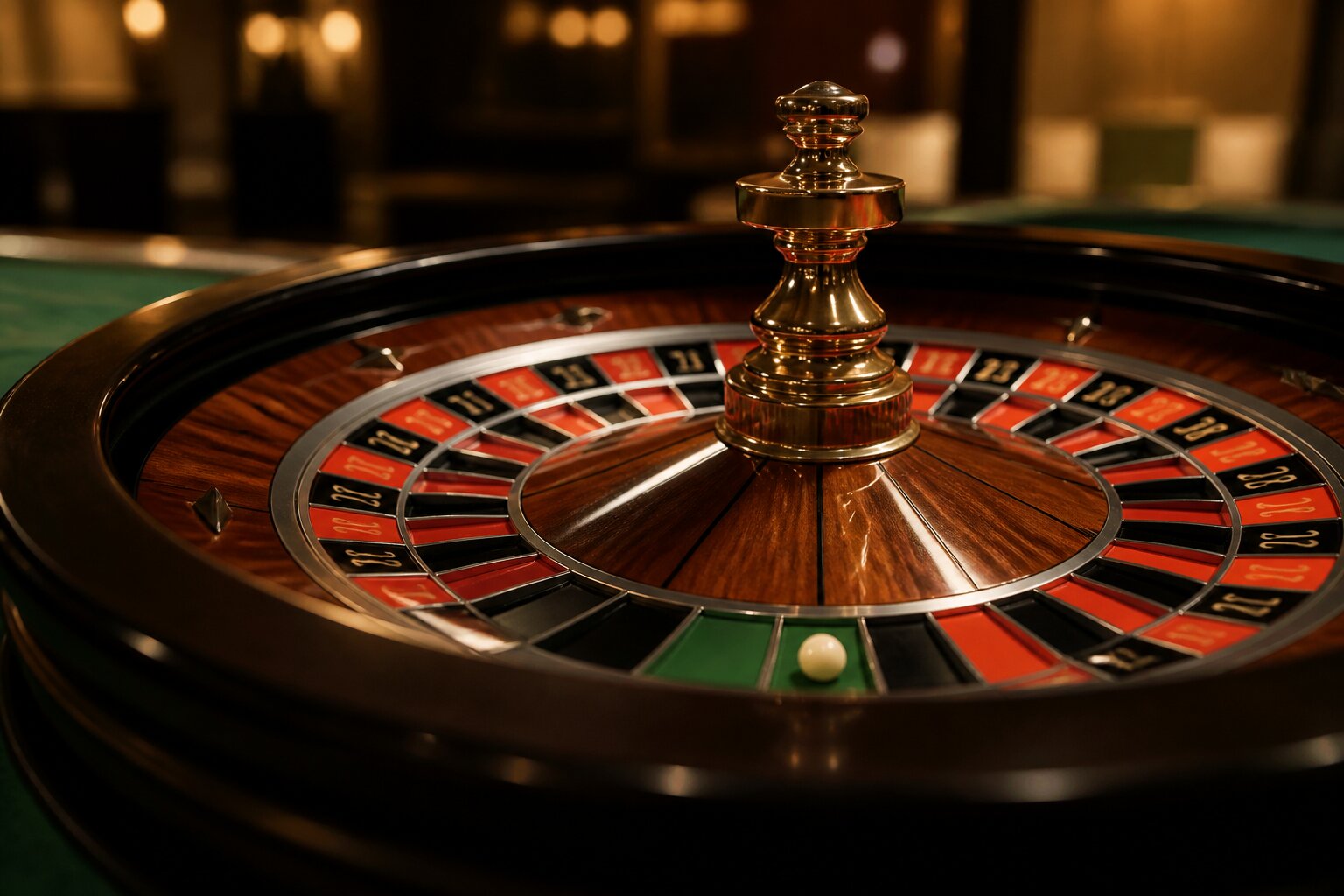
Roulette has a long history and a simple visual: a spinning wheel, coloured pockets and a ball that settles on a number. One small detail stands out on the wheel and table layout — the green zero — and that single space does something the other numbers do not.
Many players wonder where zero fits in the usual even/odd or red/black categories. The answer is straightforward but has meaningful consequences for bets and payouts, so it’s worth understanding before placing wagers.
If you want to know how zero changes the maths of the game and why it matters on different wheels, read on — the next sections explain its role and how it affects common bets.
The Role of Zero in Roulette Table Layouts
On a European roulette table, numbers 1 to 36 are split between red and black, while the number 0 is shown in green and placed apart from that grid. This visual separation signals that zero is not treated the same as the other numbers.
American roulette places two green spaces, 0 and 00, also set apart from the main layout. Their separate placement makes them easy to spot and underlines that they follow distinct rules compared with the red and black pockets.
Zero is not included in the even or odd categories, nor in red or black. Its colour and position are practical cues for players and dealers, and they reflect how zero interacts with the betting options on the table.
How Zero Affects Roulette Bets & Payouts
When the ball lands on zero it affects many bets around the table because zero does not count as red, black, even or odd. That means outside bets on those categories lose when zero appears.
A straight-up bet on the number zero itself pays the standard straight-up payout. For a single zero on a European wheel the payout is 35 to 1 for a successful bet on 0.
Some tables use special rules for even-money bets when zero comes up, most notably certain French table rules that may return part of a stake or leave the bet for the next spin. These rules are not universal, so it’s helpful to check the table rules where you are playing.
Bear in mind that each spin is independent. Knowing how zero affects specific bets helps you understand the possible outcomes and make informed choices while playing.
Why Is Zero Important in Roulette Games?
Zero is central to the design and history of roulette. Its introduction changed how the game worked compared with earlier betting wheels and, in practical terms, it delivers the casino’s mathematical advantage.
Because zero is excluded from common outside bets, it reduces the probability of those bets winning compared with what a straightforward even split would suggest. That single exclusion is the key reason the house has an edge on roulette wagers.
On a European wheel with one zero the house edge comes to about 2.7%. The presence of an additional double zero in American roulette raises that figure, which is why many players prefer the single-zero layout when given the choice.
Common Myths About Zero in Roulette
There are several persistent myths around zero. One is the idea that zero is "due" after it has not appeared for a while. In reality, every spin is independent and past results do not change the odds for the next spin.
Another myth is that betting on zero will somehow improve a player’s overall chances or that patterns exist which reliably predict its arrival. No proven system exists that can predict or influence where the ball will land.
If you hear claims about special strategies to beat the wheel, treat them with scepticism. Understanding the mathematics behind zero gives a clearer picture than following unproven ideas.
Keep play within your limits and focus on the rules and probabilities rather than myths. That way you stay informed and in control of your decisions.
Zero in European vs American Roulette: What’s the Difference?
European roulette has one green zero, while American roulette has both zero and double zero. The extra green pocket on the American wheel increases the total number of possible outcomes and slightly shifts the balance of the game.
That additional pocket affects the likelihood of winning particular bets and changes the layout and balance of the wheel. The single-zero European wheel is mathematically more favourable to players than the double-zero American wheel because there are fewer non-paying pockets for outside bets.
In concrete terms, the difference shows up in the house edge and in how often different bets win:
- European roulette has a house edge of about 2.70%.
- American roulette has a higher house edge of about 5.26%.
These figures reflect the long-term expected return to the player and are useful to consider when choosing which table to join, as they influence expected return over time.House Edge Explained: How Zero Shapes the Odds
Zero is what creates the house edge in roulette. The house edge is a small, built-in percentage that ensures the casino’s long-term advantage. In roulette, that advantage comes directly from pockets such as zero that sit outside common bets.
When you place an even-money wager like red or black the apparent 50/50 split is altered by the existence of zero. On a single-zero wheel the effective disadvantage for these bets works out to roughly 2.7%. With a double-zero wheel the edge increases, reflecting the extra non-paying outcome.
Understanding the house edge clarifies why payouts are set as they are and helps manage expectations about outcomes. That knowledge is useful when deciding which bets to make and which wheel to play on.
Final statement: zero is neither even nor odd, but a distinct pocket that shapes the structure and odds of roulette; recognising its role is essential for making informed betting choices and for understanding the differences between wheel types.
**The information provided in this blog is intended for educational purposes and should not be construed as betting advice or a guarantee of success. Always gamble responsibly.