
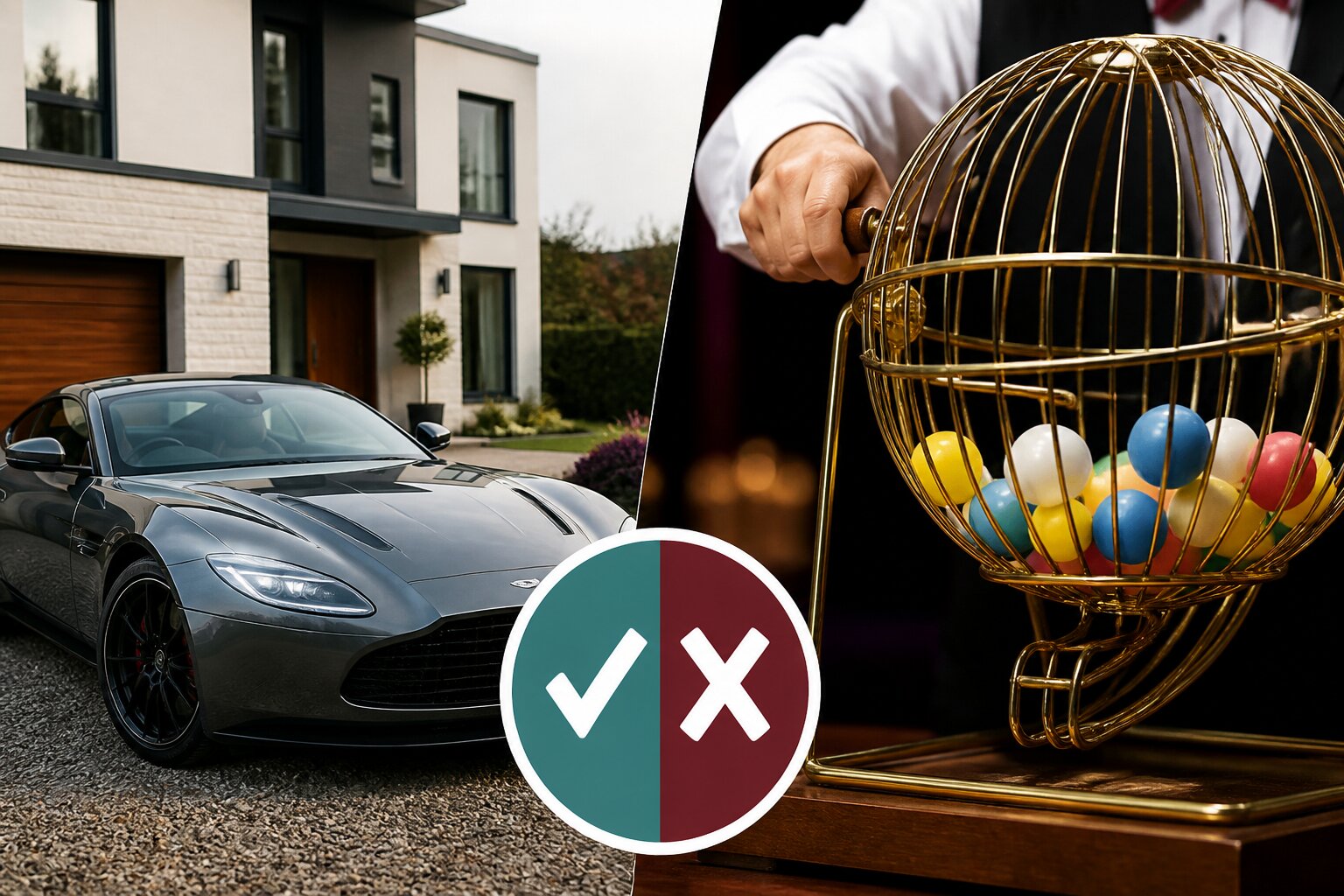
Ever wondered how the prize draws you see advertised by Omaze measure up against the traditional lottery tickets you’ve known for years? Both routes can lead to large prizes, but they work in distinctly different ways.
This article compares how each operates, what you can win, the odds, costs and how funds are used, so you can decide which suits you best. Read on for a clear, practical breakdown without jargon.
What Is Omaze & How Does It Work?
Omaze is an online prize draw platform that sells entries for limited-time draws tied to particular high-value prizes, often homes, cars or exclusive experiences. Entrants buy entries through the website and may increase their chance of winning by purchasing more entries; each draw has its own entry period and terms.
A notable part of the Omaze model is its link with charities: a stated portion of entry fees is directed to a designated charity associated with the draw. Draws are conducted using electronic systems and are subject to external verification to ensure the published process is followed. Eligibility rules require participants to be 18 or over and to meet the conditions set out for each draw.
Understanding how entries are sold and how prize allocations work will make it easier to compare Omaze with more familiar lottery formats, which we look at next.
How Do Traditional Lotteries Operate in the UK?
Traditional UK lotteries use a long-established format where players buy tickets and select numbers in the hope of matching those drawn at set times. Ticket prices are fixed and regular draw schedules are common, for example weekly or twice-weekly games. Prizes are predominantly cash, with multiple prize tiers for partial matches.
Official lotteries operate under regulatory oversight to ensure fair draws and secure handling of funds. Age verification prevents underage participation and operators publish details such as ticket price, prize breakdown and the odds for each prize tier. A portion of every ticket sale is allocated to good causes, with the remainder covering prizes, retailer commissions and administrative costs.
With a clear idea of how traditional lotteries structure draws and funding, the next question many people ask is how the odds compare between these two formats.
Are the Odds Better with Omaze or Traditional Lotteries?
Odds differ between Omaze and traditional lotteries because of how each sets entry pools. In Omaze draws, the chance of winning any specific prize depends on the total number of entries that particular draw receives; because entry numbers can fluctuate and are sometimes announced only after the draw closes, exact odds may be hard to predict ahead of time.
By contrast, many national lottery games publish fixed odds that come from the number of possible number combinations. For example, matching all six main numbers in Lotto is approximately one in 45 million. Games with larger number pools or additional bonus mechanics typically produce longer odds.
Both formats are designed so only a very small proportion of entrants win the largest prizes. With that in mind, considering where prize types and entry costs align with personal preferences can help in choosing which format feels more appealing.
What Prizes Can You Win?
Prizes vary widely between the two models and are a major factor in deciding which to enter. Below are the typical prize types you will encounter and what they mean in practice.
Types of Prizes Offered by Omaze
Omaze often lists high-value non-cash prizes such as branded homes, luxury cars and curated travel packages. These prizes are usually presented as experiential or tangible items rather than straight cash, and the listing for each draw will set out any limits or options for converting part of the prize into a cash sum where that is permitted.
Sometimes a cash element forms part of a prize package, either as a standalone sum or to cover tax and associated costs. Prize descriptions commonly include details about how any cash element is paid, whether costs such as travel, insurance or taxes are covered, and any time limits for claiming the prize.
Special draws can include VIP experiences or access to events that would otherwise be difficult to obtain. Winners should expect to comply with standard verification procedures, and the promoter will publish any residency, age or publicity requirements tied to accepting certain experiential prizes.
Each draw publishes the full prize list and any conditions that apply to redeeming the prize. It is important to read those terms carefully, as they explain delivery timelines, substitution rights and any restrictions on when or how a prize can be used.
Types of Prizes Offered by Traditional Lotteries
Traditional lotteries generally focus on cash payouts across several prize tiers, allowing a broad spread of smaller and larger cash wins. The structure usually ranges from modest fixed prizes for lower-tier matches to large progressive jackpots that roll over until a winner is found.
Big jackpots can reach multi-million-pound levels, while lower tiers reward partial matches. Payouts are typically subject to the lottery operator’s published rules on split prizes and the number of winners at each tier, and those rules explain how prize amounts are calculated when there are multiple winners.
Occasionally, special promotional draws offer non-cash rewards, but cash remains the standard payout form. Where non-cash promotions are run, the lottery will similarly publish the full terms, including any substitution options, eligibility conditions and timelines for claiming the prize.
The published prize structure explains how many winners are expected at each level and any applicable rules. As with Omaze draws, winners of traditional lotteries will normally have to pass identity checks and follow the operator’s procedures to claim a prize.
Knowing the prize formats makes it easier to weigh the appeal of a specific draw against the odds and cost, which we examine in the next section. Understanding the full terms and redemption requirements for each prize helps ensure there are no surprises if you win.
How Are Winners Chosen?
Both Omaze and traditional lotteries use random selection methods designed to be impartial and verifiable. Omaze typically runs an electronic draw where every valid entry is included in a secure system. Third-party verification or an independent adjudicator is often present to certify the result.
Traditional lotteries may use mechanical ball draws or computerised random number generators, and these methods are subject to regular testing and audit. Results are published so the public can review how winners were determined. In all cases, controls are in place to ensure each valid entry is treated equally and that the draw follows the stated rules.
Understanding how winners are selected leads naturally to considering how you actually enter and what that will cost you.
Costs & Entry Methods Compared
Entry methods and costs are practical matters that shape the experience. Omaze sells entries online with tiered pricing that often reduces the cost per entry when purchasing bundles. Sometimes a free postal entry route is offered for those who prefer not to pay, though all entrants must meet the stated eligibility criteria for a draw.
Traditional UK lotteries generally charge a fixed price per ticket and provide multiple purchase channels such as shops, online accounts and mobile apps. There are no free entry options for most official lottery games. Payment methods and purchase convenience differ between providers, so checking the entry terms before buying is sensible.
How money is allocated from those sales affects charities, prize pools and operating costs, which is the focus of the next section.
Where Does the Money Go?
Both models provide published breakdowns of how income from entries or ticket sales is distributed, but the allocations reflect different priorities and commitments. Each operator produces information so players can see how their payments are used, and the emphasis placed on prizes, administration and societal benefit differs between the two approaches.
Donations and Charity in Omaze
A specified percentage of each Omaze entry fee is directed to the draw’s nominated charity. The exact share varies by draw and is clearly stated in the draw materials, so entrants can see how much is raised for the charitable partner and what proportion of the entry fee is intended for good causes.
Remaining funds are used to cover the prize itself, running costs and promotional activity. Omaze typically publishes details of the charity partner, the supported cause and how funds will be applied, providing some transparency about the charitable outcomes. As with any fundraising model, administrative and fulfilment expenses form part of the costs deducted before funds reach the charity.
Lottery Revenue Allocation
Traditional lotteries allocate ticket sales across prize funds, contributions to good causes, retailer commissions and operational expenses. A notable portion typically supports community projects, arts, sport and heritage initiatives, with percentages that can vary by operator and by jurisdiction.
Operators publish details of these allocations in official reports and annual accounts, giving transparency about how proceeds are spent and the scale of support for public programmes. Regulatory oversight often requires clear reporting so consumers can understand where money goes and how much is returned in prizes versus how much is directed to wider social projects.
With funding and allocation explained, questions about legality and player protections naturally follow.
Legal Considerations & Player Protection
Both prize draws and lotteries must meet legal requirements and operate under the oversight of UK regulators. Licensing and compliance ensure that draws are conducted fairly, entries are handled securely, and terms are clearly published.
Age verification is mandatory to prevent underage entry. Providers must also offer measures that support safer participation, such as tools to set spending limits or to self-exclude. Where concerns about gambling behaviour arise, impartial support organisations provide confidential advice and assistance.
These protections, combined with transparent rules and audited draws, help ensure participation is conducted according to expected standards. The final section helps bring these points together to aid your choice.
Which Option Is Right for You?
Deciding between Omaze prize draws and traditional lotteries depends on what appeals most: the specific prize types, how the entry cost fits a budget, and the clarity of the odds. Omaze tends to suit people drawn to distinctive, high-value non-cash prizes and the knowledge that a share of proceeds supports a charity. Traditional lotteries appeal to those who prefer straightforward cash prizes, fixed ticket prices and published odds.
Think about whether you value a chance at a unique experience or prefer the transparency and familiarity of conventional lottery formats. Consider how much you are comfortable spending and what you expect to get from the experience. Use the published terms, prize details and odds to guide a choice that matches your priorities.
Whichever route you choose, treat entry as entertainment rather than a financial plan, check the official rules before taking part, and use the available safeguards if you ever need them. That way your participation stays informed and within your control.
**The information provided in this blog is intended for educational purposes and should not be construed as betting advice or a guarantee of success. Always gamble responsibly.