
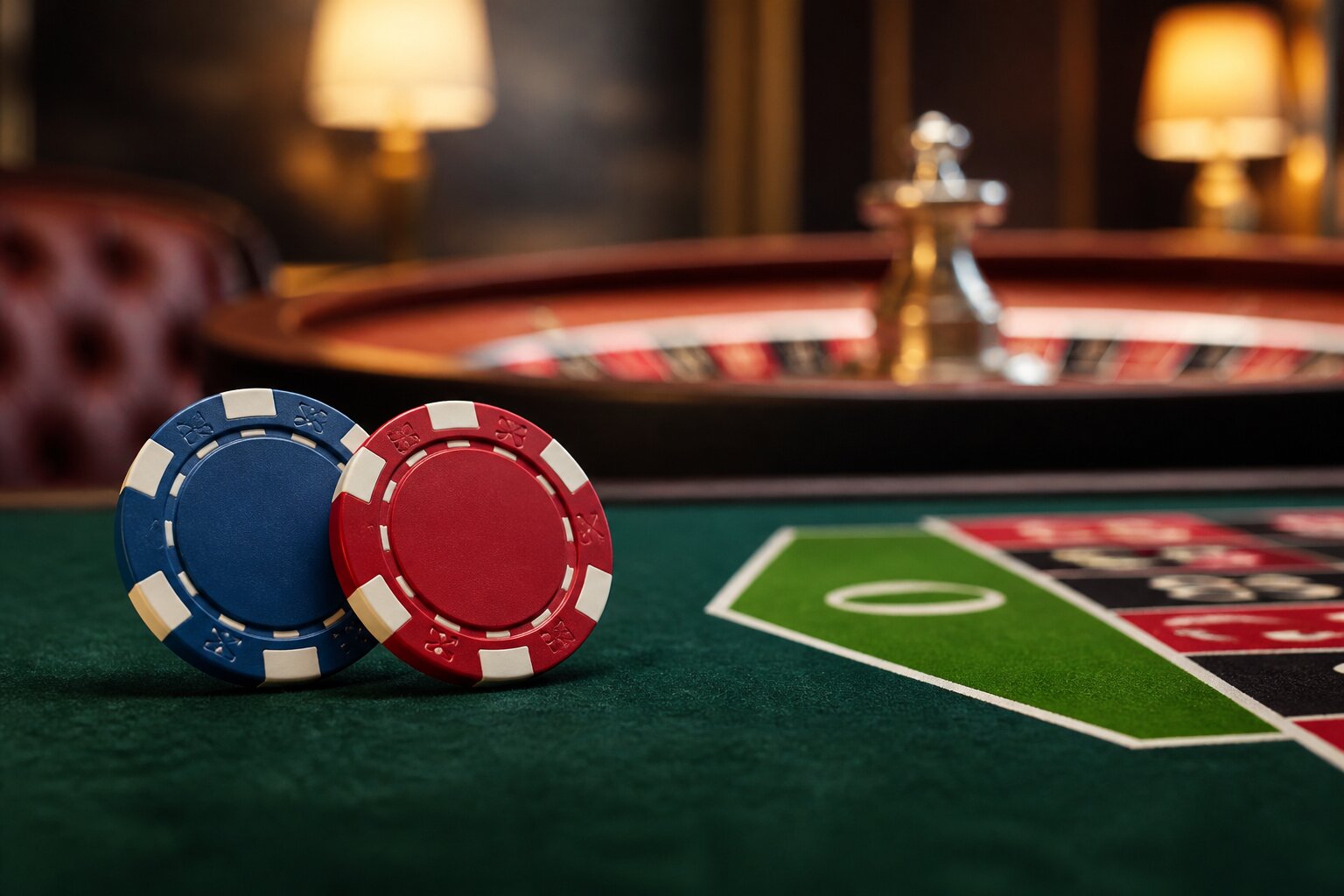
If you’ve ever watched that little roulette ball spin, you know how thrilling it is when it lands on a single number—especially those green 0 and 00 pockets. Many players wonder what happens if you hit one of these numbers and what sort of payout to expect.
Whether you’re new to roulette or simply curious about the mechanics, understanding how 0 and 00 affect payouts and odds gives clearer insight into how the game works. Read on to learn what these numbers mean for your bets and how they change the game’s maths.
Ready to find out how much you could win and why these pockets matter? The next section explains their role on the wheel.
Understanding the 0 and 00 in Roulette
The 0 and 00 pockets are marked in green and are treated differently from the red and black numbers. They play a central role in the game by changing the number of possible outcomes on each spin, which in turn affects the odds for every bet.
European roulette has a single 0, making 37 numbered slots in total: 1–36 plus 0. American roulette adds a second green pocket, 00, bringing the total to 38. On American tables, 0 and 00 are separate numbers and can be bet on individually.
These extra pockets are the reason the casino maintains an edge over players: they slightly increase the number of losing outcomes compared with even-money bets and other combinations. With that in mind, the next section looks at how those payouts are worked out when you back 0 or 00.
How Are Payouts Calculated for 0 and 00 Bets?
Payouts in roulette are determined by the type of bet and how many numbers it covers. A straight-up bet on 0 or 00 covers a single number and pays 35 to 1. So a £1 straight-up win returns £35 plus the original £1 stake.
Bets that cover more numbers pay less because they cover more possible outcomes. For example, a split bet covers two adjacent numbers and pays 17 to 1. Other bets such as street, corner, or the basket cover three, four or five numbers respectively and have correspondingly lower payouts.
The balance between payout and probability is deliberate: higher returns correspond to lower chances of winning, and vice versa. With that balance in mind, the following section examines the actual odds of hitting 0 or 00 on a given spin.
What Are the Odds of Hitting 0 or 00 in Roulette?
The probability of the ball landing on 0 or 00 depends on the wheel you are playing. In European roulette, a single 0 among 37 slots gives a chance of 1 in 37, which is about 2.7% on any given spin. In American roulette, there are two green pockets, 0 and 00, so each spin has a 2 in 38 chance of landing on one of them, which is roughly 5.26% for either green combined or about 2.63% for each individual green pocket.
Each spin is independent, so previous results do not alter the odds of the next spin. The physical mechanics of the wheel and the layout of the pockets set those probabilities, and they remain constant over time. If you play many spins, the long run frequency of 0 or 00 will tend to approach these theoretical probabilities, although short term variations are normal.
No betting approach can change these fundamental probabilities or the intrinsic advantage they give the house. Understanding the different chances on European and American wheels helps explain why the house edge differs between the two, which in turn affects the expected return to players over many spins.
European vs American Roulette: Differences in 0 and 00
At first glance the two versions look alike, but the extra 00 on American wheels alters the maths in a meaningful way. Both versions offer the same payouts for winning bets, yet the presence or absence of that second green pocket changes how often wins occur and therefore the casino’s statistical advantage over time.
The additional 00 pocket on American wheels means there are more losing outcomes for most bets. That single change may seem small, but it compounds over repeated spins and affects expected returns for players. Knowing which wheel you are facing is an important part of understanding the overall risk.
Table Layout and House Edge
European roulette’s single zero leaves 37 slots on the wheel and produces a house edge of about 2.7%. This lower edge is a direct consequence of having only one green pocket that pays neither red nor black, odd nor even.
American roulette, with 38 slots including both 0 and 00, raises the house edge to roughly 5.26%. That higher edge reflects the additional losing outcome created by the double zero and makes the long-term expected loss per spin nearly double that of the European version.
Impact on Payouts and Probabilities
Although straight-up and other bet payouts are identical across both versions, the extra pocket on American wheels reduces the chance of any single number being hit on a given spin. This includes both 0 and 00, which each occupy their own slot and so split the probability that in European roulette would be taken by a single zero.
As a result, players face less favourable long-term returns on American wheels compared with European ones. Over many spins the difference in probabilities translates into a noticeable divergence in expected outcomes, which is why some players and strategists prefer tables with a single zero when available.
Understanding these differences helps when choosing which table to play, and the following section addresses some common misconceptions about zero payouts.
Common Myths About Zero Payouts
Several persistent myths surround 0 and 00, and they can lead to misplaced expectations. One widespread belief is that a zero is “due” after a run of non-zero results. In reality, every spin is independent; there’s no mechanism that makes the zero pockets more or less likely over a series of spins.
Another myth suggests that zero-type bets offer a special advantage. In practice, a straight-up wager on 0 or 00 has the same payout as any other single-number bet, and the house edge is already built into those odds. Similarly, systems that promise to increase the chance of hitting zero cannot alter the wheel’s probability structure.
Clearing up these misconceptions makes it easier to assess whether bets that include 0 or 00 suit a player’s approach. The next section considers how those payouts influence betting choices in practice.
How Payouts on 0 and 00 Affect Betting Choices
The high payout for straight-up bets—35 to 1—can be attractive, particularly for players who prefer the chance of a big return from a small stake. At the same time, the low probability means such wins are infrequent, so many players treat zero bets as occasional gambles within a wider strategy.
Some include 0 or 00 in bets that cover neighbouring numbers to spread exposure. Others prefer to avoid single-number wagers and focus on bets with higher probability and smaller payouts. The key consideration is how the potential return matches a player’s tolerance for variance.
With that in mind, there are also specialised wagers that explicitly involve 0 or 00, and those deserve a closer look next.
Roulette Side Bets Involving 0 or 00
Certain roulette tables offer side bets that specifically include the zero pockets. On American tables, the basket bet covers 0, 00, 1, 2, and 3 and pays 6 to 1. It is straightforward to understand but carries a higher house edge than many standard bets.
In European play, the trio bet lets a chip cover three numbers that include zero—typically 0, 1, and 2 or 0, 2, and 3—and usually pays 11 to 1. These side bets provide extra options for players who want to involve zero in their wagering, but they come with their own probabilities and returns that should be weighed against other choices.
Knowing the specific rules and payout rates for any side bet helps decide whether it complements a preferred betting style. The following section sums up the trade-offs involved in backing zero pockets.
Pros and Cons of Betting on 0 or 00 in Roulette
Backing 0 or 00 offers the clear upside of a large payout for a small stake, which can be appealing for players seeking occasional high returns. The drawback is the low chance of success, meaning wins are infrequent and variance is high.
Including zero bets can diversify outcomes, but it also increases the chance of short-term losses. Over many spins the house edge determines expected results, so these bets are most useful when treated as part of a balanced approach rather than a primary strategy.
Deciding whether to wager on 0 or 00 comes down to personal preference and how much volatility a player is willing to accept. If you want to check answers to typical questions about zero pockets, the next short section addresses the most common ones.
What do 0 and 00 represent in roulette?
0 and 00 are the green pockets that add additional outcomes to the wheel; European tables use a single 0, while American tables include both 0 and 00. They are the elements that increase the house edge and affect the odds for every bet.
What is the payout for landing 0 or 00?
A straight-up wager on either 0 or 00 pays 35 to 1. A £1 winning bet would return £35 plus the original stake.
Are my chances of hitting 0 or 00 good?
Chances are low: about 1 in 37 on a European wheel and 1 in 38 on an American wheel for each individual green pocket.
Can betting systems improve my odds of winning on 0 or 00?
No betting system can change the fixed probabilities of the wheel. Every spin is independent and the expected returns follow from the table layout.
Do side bets involving 0 or 00 offer better value?
Side bets that include zero have distinct payout rates and typically carry higher house edges. Understanding their rules and comparing expected returns helps determine whether they suit a particular style of play.
Play should always be within personal limits and guided by safe gambling practices. If you want to try different approaches at the table, choose bets that match your tolerance for risk and the type of experience you want.
**The information provided in this blog is intended for educational purposes and should not be construed as betting advice or a guarantee of success. Always gamble responsibly.