
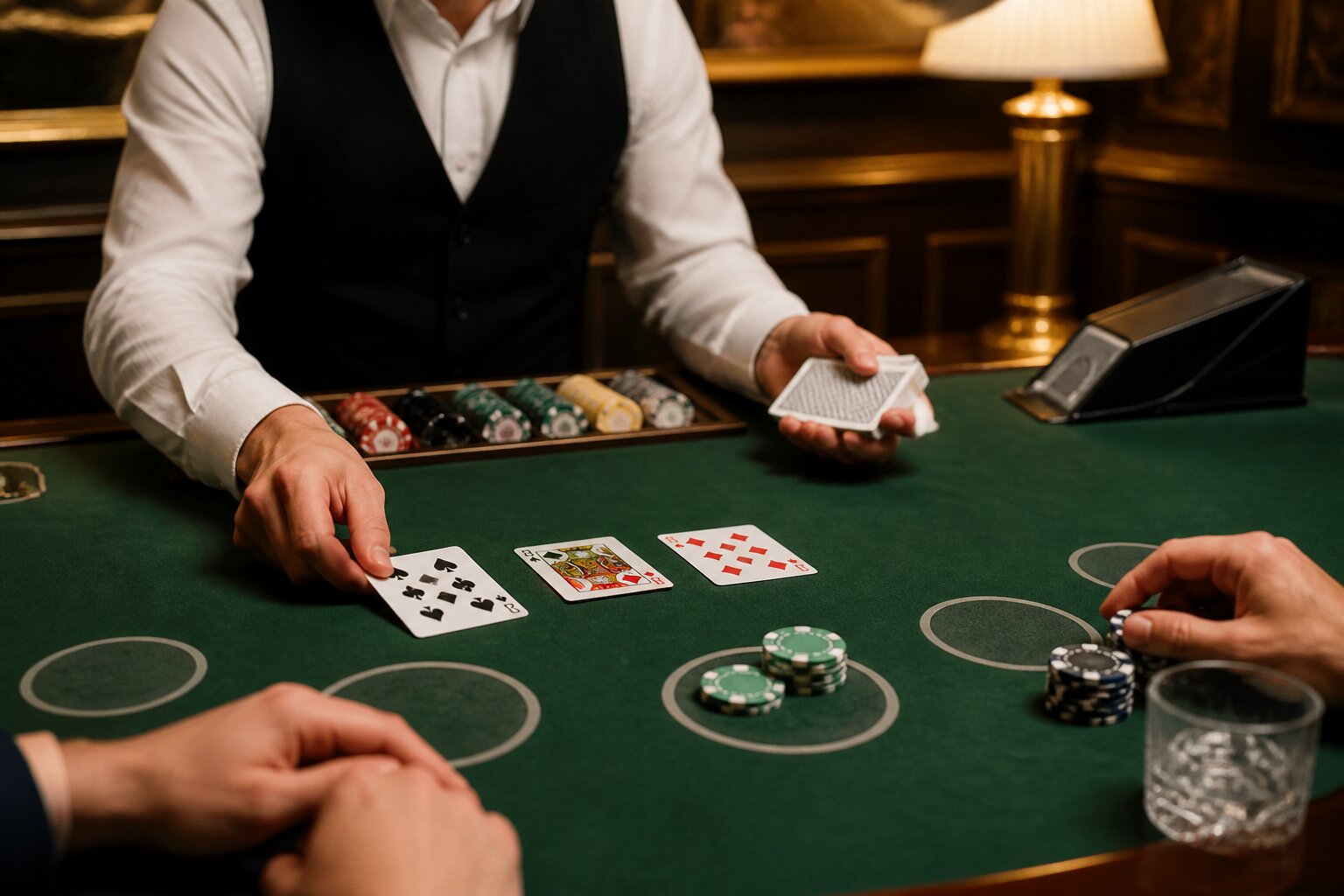
Ever wondered how many blackjack hands you’ll actually play in an hour? Whether you’re new to the table or a regular, knowing the typical pace can shape how you plan a session and manage your money.
The speed of blackjack depends on more than the dealer’s shuffle or the number of players. Factors such as game variant, shuffling method and whether you play online blackjack or live all change how many rounds you can expect.
Read on to learn what affects hands per hour, how that pace influences your session, and practical ways to make the most of your time at the table.
What Does "Hands Per Hour" Mean in Blackjack?
"Hands per hour" refers to the number of complete rounds dealt in a 60-minute period. A complete round runs from the initial deal to the settlement of bets—win, loss or push. For anyone keeping track of their session length or bankroll, this metric gives a clear idea of how quickly bets will be placed and settled.
The figure is useful when comparing different playing environments because it affects how often your stake is at risk. For example, a fast digital game will show a higher hands-per-hour figure than a busy live table. That difference matters when estimating how many bets you might place during an evening, and when considering exposure to short-term variance.
Several practical factors influence hands per hour, including:
- the number of players at the table: more players usually means fewer hands per hour
- dealer speed and procedures, such as how quickly cards are dealt and payouts are made
- equipment, for example whether the game uses a shoe, single deck or a continuous shuffling machine
- online versus live play: automated dealing and faster decision timers online often increase the rate of hands
Understanding hands per hour helps with time management and gives a clearer picture of how quickly bankroll fluctuations can occur. It is not a guarantee of outcomes and should be used alongside responsible play practices.
How Many Rounds Are Played Per Hour at a Casino Table?
At a traditional casino table with several players, average play typically falls between 60 and 80 hands per hour. That figure assumes the table has multiple players making ordinary decisions and a dealer working at a steady pace.
At heads-up play—just the player and the dealer—the rhythm speeds up and you might see 150 to 200 hands an hour. The main reason is simple: fewer players mean fewer decisions and less time between deals.
These are averages, so expect variation. Busy times, player conversation, newcomers learning the game or a dealer taking longer to shuffle can all lower the rate. In contrast, an experienced dealer at a half-full table running continuous shuffles can push the count toward the higher end.
What Factors Affect the Pace of Blackjack Games?
Several elements influence how many hands are played in an hour:
- Number of players: More players means more decision time and fewer hands in an hour.
- Dealer speed: Experienced dealers handle bets, payouts and shuffles more efficiently.
- Shuffling method: Continuous shuffling machines (CSMs) and automatic shufflers dramatically reduce downtime between hands compared with manual shuffling.
- Game variant and table rules: Options such as multiple actions (split, double), frequent side bets or complex payouts add time to each round.
- Player behaviour: New players asking questions, consults about strategy or hesitancy over decisions slows play.
To give a concrete example: a six-player table with manual shuffles and occasional side bets might average 60 hands an hour, whereas a three-player table using a CSM could push close to 100 hands.
Are Online Blackjack Games Faster Than Live Casino Tables?
Purely digital online blackjack is usually the fastest option. There’s no physical dealing or manual shuffling, the software handles bet settlement instantly, and you don’t wait for other players to act. This can produce well over 100 hands per hour depending on the site.
Live dealer streams mimic the in-room experience and therefore move at a similar pace to brick-and-mortar tables. They still carry the delays associated with human decisions and physical shuffling, though some live-stream tables use automatic shufflers to speed things up.
When choosing between these formats, think about what matters to you: more hands per hour for quicker sessions, or a slower, more social pace where each decision has a little more time.
Average Number of Players and Their Impact on Game Speed
A full table commonly has six to seven players; each additional decision naturally slows play. With fewer players—two or three—the dealer spends less time between rounds, increasing hands per hour.
Player mix matters too. Regular players who know basic strategy will act faster than beginners who consult charts or ask the dealer for clarifications. In turn, that speedier play changes the tempo of your session and how quickly your bankroll is used.
If you prefer a leisurely pace to think through decisions, a fuller table or live-dealer stream might suit you. If you want to fit more rounds into a short visit, opt for fewer opponents or a digital game.
Does the Dealer’s Speed Change the Number of Hands Per Hour?
A dealer’s technique and confidence affect round length. An efficient dealer will handle bets, pushes and payouts with minimal delay, reducing idle time between hands. Conversely, a slower or less experienced dealer may add minutes per round, especially during complex payouts or when changing shoes.
Shuffling style ties into dealer speed as well. A skilled dealer can still be slowed significantly by a full manual shuffle, while a dealer operating a continuous shuffler keeps the action flowing.
Dealer speed doesn’t alter the game’s rules or probabilities; it simply affects how many hands you’ll play in a set time. That difference matters when you’re budgeting for a session or aiming to control how many bets you place.
Myths About Blackjack Game Speed Debunked
Common misconceptions about game pace can lead to poor expectations. One frequent myth is that playing faster somehow improves your chances; the speed of play does not change the game’s underlying rules or the way cards are dealt. Another is that a slow dealer advantages the player—while slower play prolongs your session, it does not affect outcomes.
Some players think joining a quiet table is a shortcut to better results. Fewer players mean more hands per hour, but that only increases the number of wagers you place, not your likelihood of winning.
Understanding these points helps you make sensible choices about where and how to play, based on what you want from the session rather than on false assumptions.
How Game Pace Impacts Player Experience and Outcomes
The tempo of play shapes both the feel of a session and how quickly your balance changes. Faster games mean more hands and more bets in the same time, which can accelerate losses or gains. Slower tables extend a session and give you more time to consider decisions and observe trends in how the table is running.
Your personal comfort with decision speed matters as well. Some players prefer the steady cadence of a slow table to think through options, while others like the brisk rhythm of quicker play. Neither approach affects the fairness of the game, but each affects how long a given bankroll will last.
If preserving session length is important, choose environments with a slower hands-per-hour rate. If you want more action in a shorter visit, a faster table delivers that—just be mindful of how many bets that implies.
Tips for Managing Your Session Based on Average Hands Per Hour
Knowing the likely number of hands you’ll play makes it easier to plan a session that fits your preferences and budget. Consider the following approaches.
- Set a spending limit and a time frame before you start, so you can judge how many bets you can afford at the expected pace.
- Monitor bet size relative to how many hands you anticipate. If you’re at a table dealing 100 hands an hour, your planned stake per hand will be used up more quickly than at a 60-hand table.
Treating your session as entertainment with a fixed budget helps keep it controlled. If you notice the pace or your mood changing, stepping away for a short break can help you reassess how you want to continue.
This guidance is designed to help you enjoy blackjack in a way that suits your time and money, while keeping your play within sensible limits.
**The information provided in this blog is intended for educational purposes and should not be construed as betting advice or a guarantee of success. Always gamble responsibly.