
Ever wondered how much you actually win when you land that perfect blackjack? Or perhaps you’ve seen terms like “3 to 2 payout” and “house edge” and want to know what they mean for your stake.
This short guide explains the payouts, the odds behind common hands, and how side bets change the picture — all in plain language so you can play with a clearer idea of what’s at stake. Read on to see what different results pay, how likely they are, and which table features are worth checking before you sit down.
Understanding Blackjack Payouts
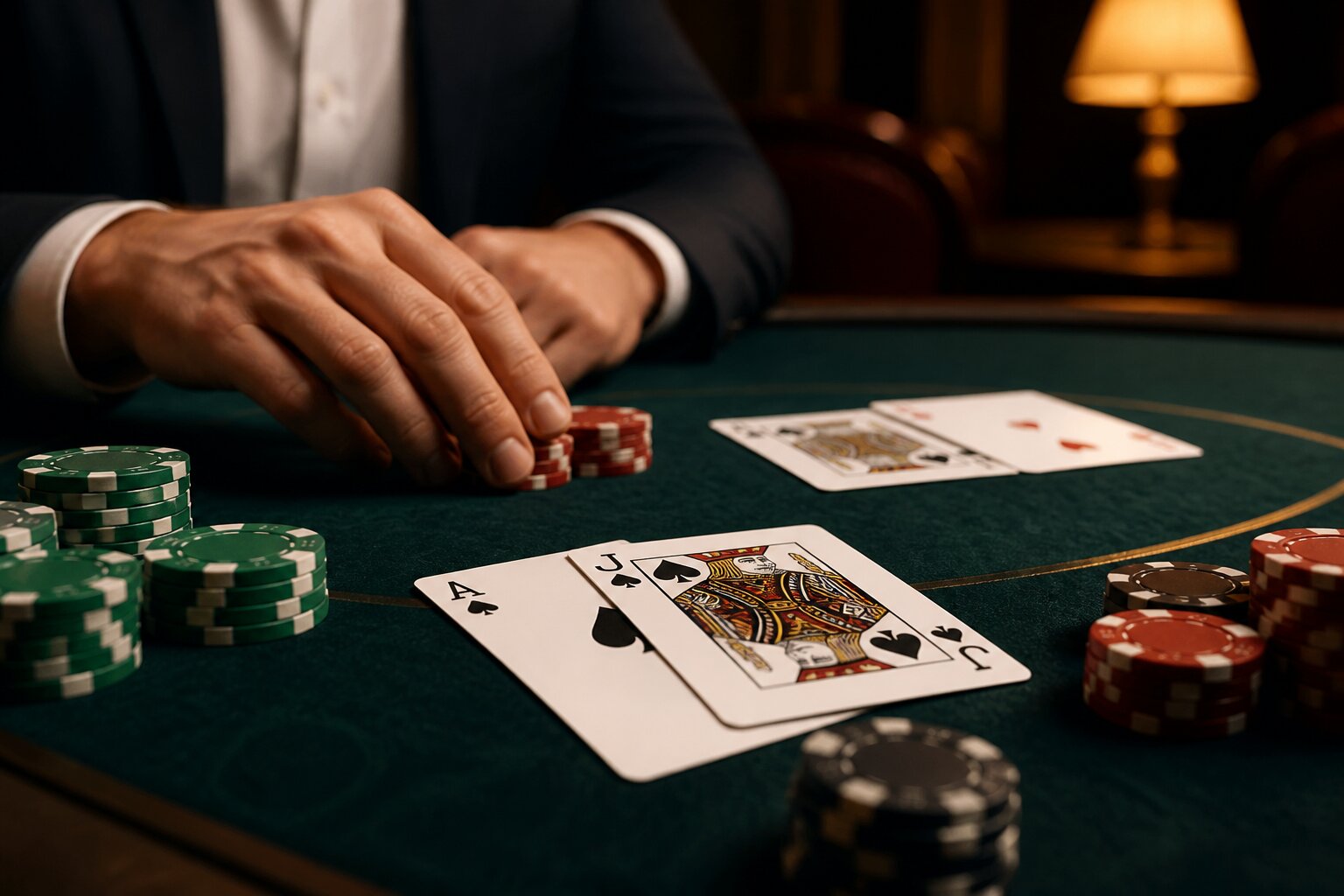
Blackjack payouts are the amounts returned to you when a hand ends in your favour, based on the bet you placed at the start of the round. The most valuable outcome is a natural blackjack — an ace plus a ten-value card on your first two cards — which usually pays 3 to 2. That means a £10 bet would return £15 in winnings plus your original £10 stake.
If your hand simply beats the dealer’s total without exceeding 21, the usual payout is even money (1 to 1), so a winning £10 stake returns an additional £10. When the hand ends in a push—a tie between player and dealer—your original bet is returned.
Insurance, an optional side wager offered when the dealer’s visible card is an ace, has its own payout structure and only resolves if the dealer has a blackjack. Because these extra bets follow different rules, it’s useful to know their terms before committing any extra stakes. A quick look at the table notes or game rules will tell you what to expect for each possible outcome. This understanding helps you choose which games or bets match your preferences, and prepares you for the variations described below.
What Are the Standard Payouts in Blackjack?
Standard table rules keep the game straightforward for most players. The 3:2 payout for a natural blackjack is the main advantage a player can get, while regular wins pay 1:1 and pushes return the stake. Some tables, however, apply different rules: a small number may pay 6:5 on naturals, or apply special conditions to splitting and doubling.
Side bets and optional features follow their own pay tables, which can substantially alter returns on any given hand. That’s why scanning the specific table rules before you play matters — differences that look small on paper can change the expected return over time. If you prefer simpler maths and more predictable outcomes, choosing tables that stick to standard payouts usually keeps things clearer.
How Do Side Bets Affect Payouts?
Side bets are extra wagers placed alongside the main hand, resolved against specific conditions such as pairs or poker-style combinations. Common examples include Perfect Pairs and 21+3, each with its own payout ladder offering higher rewards for rarer outcomes, like matched suits or three-card combinations.
These bets typically carry a higher casino advantage than the main game, so while they can deliver larger one-off payouts, they’re generally less favourable over many hands. Treat side bets as optional extras — they add variety but should be sized carefully within any budget to avoid changing the overall risk profile of your session. With the main game’s payouts already understood, you can weigh whether the potential upside of a side bet is worth the added cost.
Comparing Single Deck vs Multi-Deck Games
The number of decks in play affects the distribution of cards and therefore the probabilities of certain outcomes. Single-deck games can make it easier to infer which cards remain in the shoe, which slightly improves the player’s mathematical position compared with multi-deck games. For that reason, some operators adjust rules or payouts when using fewer decks.
Multi-deck games — commonly four, six or eight decks — increase the volume of cards and make specific card outcomes less predictable, which typically raises the house advantage a little. Some variants compensate by keeping favourable rules like 3:2 payouts; others change split and double options. Choosing between single and multi-deck tables therefore depends on the exact rule set as much as the deck count. If you prefer a particular style of play, compare the rules and payouts for the specific table rather than choosing on deck number alone.
Why Do Blackjack Odds Matter?
Odds describe the probability of particular outcomes, such as drawing a specific card, getting a natural blackjack, or beating the dealer. Understanding these probabilities helps set realistic expectations and informs choices about bet sizes and which tables or variants to play.
Knowing the odds doesn’t promise any particular short-term result, but it does shape long-term expectations: if a rule change increases the house advantage by a fraction of a percent, that difference becomes important over many hands. With clear knowledge of odds and payouts, players can pick games that match their tolerance for risk and the style of play they enjoy. The next sections look at which hands matter most in practice and why.
Common Winning Hands & Their Odds
Certain opening hands have strategic importance because they create strong opportunities or force key decisions. Two classic examples are pairs — notably aces and eights — and the natural blackjack, which is both the highest-value opening hand and the most rewarding.
These hands influence how you play early in a round: whether to split, double down, or take just one more card, decisions that flow from understanding the probabilities in play.
Pair of Aces or Eights: What Are the Chances?
Being dealt a pair such as two aces or two eights is relatively rare but strategically significant. In a single-deck game, forming any specific pair as your first two cards occurs in roughly 0.45% of hands. Pairs present the option to split into two separate hands, which can be advantageous in the right situations — split aces, for example, can convert a marginal start into two strong hands. Whether splitting makes sense depends on the dealer’s up-card and the prevailing table rules.
The Value of a "Blackjack" (Natural 21)
A natural blackjack — an ace and a ten-value card on the opening deal — happens in about 4.8% of single-deck hands. Because it pays more than other wins, naturals are central to the game’s payout structure and explain why preserving a 3:2 payout is so important for many players. These moments are the clearest illustration of how payouts and odds interact to influence expected returns.
House Edge Explained
The house edge quantifies the mathematical advantage the operator holds, expressed as a percentage. In blackjack, that advantage is often lower than in many other casino games, assuming standard rules. Small tweaks — such as changing the payout on naturals from 3:2 to 6:5, or limiting doubling and splitting options — can noticeably increase this edge.
For example, a typical rule set might produce a house edge in the region of 0.5% to 1%. Over a large number of hands that percentage translates into the expected long-term hold on the money wagered. Knowing how rule variations affect the house edge lets you choose tables where the balance between risk and reward fits your preferences.
Myths About Blackjack Payouts and Odds
Blackjack attracts plenty of myths about ways to tilt the odds or secure better payouts. Clear facts help separate useful strategy from misleading ideas and keep play grounded in probability rather than speculation. Understanding the limits of strategy and the role of chance can reduce unrealistic expectations and support more responsible play.
Can Card Counting Guarantee Better Payouts?
Card counting attempts to estimate which cards remain in the deck to gain informational advantage. While it can change theoretical odds in controlled environments, in real-world play it rarely guarantees better payouts. Practical complications such as multiple decks, frequent reshuffles and dealer procedures often blunt any edge that counting might create.
Casinos also use rules, surveillance and staffing to limit the effectiveness of counting, and many venues will intervene if they suspect advantage play. For most players, focusing on the table rules, basic strategy and sensible stake management is a more practical and reliable approach than attempting advanced techniques.
Are Some Tables Always Luckier Than Others?
The outcome of each round is independent and governed by the game’s rules and card distribution. No table has a persistent, predictable advantage for players beyond the stated rules and payout structure. Short-term streaks of wins or losses can feel meaningful, but they do not indicate a long-term change in probabilities.
Selecting a table should therefore be based on its rules and payouts rather than any expectation of a consistently better run of results. With the right information about payouts, dealer rules and odds, you can choose games that suit your approach and avoid unnecessary surprises while keeping enjoyable play within realistic expectations.
Tips to Check Payout Tables Before Playing
Before joining a table, take a moment to read the displayed rules and payout table. Differences in natural blackjack payouts, such as 3:2 versus 6:5, allowed doubling and splitting options, and side-bet terms all change the expected return. Those variations are the practical details that determine whether a game matches your goals, whether you prefer simpler rules or are tempted by side bets that pay more but carry a higher house advantage.
Look for other rule details that affect the maths, including whether the dealer hits or stands on soft 17, whether surrender is available, how many decks are in use, and any restrictions on doubling after splitting. These points can alter the house edge noticeably and will influence the best choices for your play and bankroll management.
Be deliberate about these checks: knowing the specific payouts and restrictions up front keeps the session more predictable and helps maintain a consistent approach to stakes and risk. Also check the table limits and minimums so they fit your budget, and remember that side bets typically raise the volatility and long-term house advantage, so treat them as optional extras rather than reliable ways to win.
Glossary of Key Blackjack Terms
Below are clear definitions of the common terms you’ll see at the table, presented so they’re easy to refer to during play.
Blackjack (Natural 21)
A hand that totals exactly 21 with your first two cards, usually an ace and a ten-value card.
House Edge
The built-in advantage the operator has over players, expressed as a percentage of stakes over time.
Push
A tie between the player and the dealer where the original bet is returned.
Split
When dealt two cards of the same value, the player may separate them into two hands, each covered by its own bet.
Double Down
An option to increase the original bet in exchange for receiving one additional card.
Insurance
An optional side bet offered when the dealer’s up-card is an ace; it resolves only if the dealer has a natural blackjack.
Payout
The amount returned to a player when a bet wins, determined by the table’s rules and the bet size.
Side Bet
An extra, optional wager placed on specific outcomes separate from the main hand.
Bust
When a hand’s value exceeds 21, resulting in an immediate loss.
These terms and the payout and odds information above give a practical foundation for choosing games and sizing wagers. Armed with that understanding, you can pick tables whose rules match your preferences and play with clearer expectations about outcomes and returns.
**The information provided in this blog is intended for educational purposes and should not be construed as betting advice or a guarantee of success. Always gamble responsibly.